

Table of Contents
Introduction
How to Improve Study Habits in 2025 looks very different from a few years ago. With online learning platforms, AI tools, and new teaching methods, students now need smarter strategies to stay ahead. Whether you’re preparing for exams, learning online, or balancing study with work, developing the right habits can make all the difference. This guide will show you practical and effective ways to improve study habits that actually work in today’s fast-changing world.
Why Improving Study Habits Matters
Strong study habits are the foundation of academic success. Good habits:
- Save time by keeping you organized.
- Reduce stress before exams.
- Boost memory and focus.
- Help you balance school, work, and personal life.
Bad study habits—like last-minute cramming, studying with distractions, or skipping breaks—lead to burnout and poor results. That’s why it’s important to change your approach in 2025.
10 Proven Tips to Improve Study Habits in 2025
1. Create a Digital-First Study Plan
How to Improve Study Habits Use apps like Notion, Google Calendar, or Trello to plan study sessions. These tools remind you of deadlines and keep your notes organized in one place.
2. Set Specific Study Goals
Instead of saying, “I will study math,” set a clear goal like, “I will solve 15 algebra problems in 30 minutes.” Clear goals keep you focused and motivated.
3. Use the Pomodoro Technique
Study for 25 minutes, then take a 5-minute break. After four rounds, take a longer break. This prevents mental fatigue and keeps your mind fresh.
4. Choose the Right Environment
A quiet and clean study space helps concentration. In 2025, noise-canceling headphones and focus playlists (Spotify, YouTube) are great for reducing distractions.
5. Leverage AI Study Tools Wisely
How to Improve Study Habits Tools like Quizlet AI, ChatGPT, and online flashcards can help you summarize notes and test yourself. Use them for support, not shortcuts—understanding is key.
6. Practice Active Recall
Instead of just rereading notes, close your book and test yourself. Ask questions, solve problems, or teach a friend. This method strengthens long-term memory.
7. Stay Physically Active
Exercise boosts brain power. Even a 10-minute walk during study breaks can improve focus and reduce stress.
8. Eat Brain-Friendly Foods
Healthy snacks like nuts, fruits, and water keep your energy levels stable. Avoid too much caffeine or junk food, which cause energy crashes.
9. Use Smart Revision Methods
How to Improve Study Habits In 2025, digital flashcards, mind maps, and spaced repetition apps (like Anki) are powerful tools for reviewing effectively.
10. Prioritize Sleep
A tired brain can’t focus. At least 7–8 hours of quality sleep is more effective than late-night cramming.
How to Improve Study Habits for Exams
Start revision weeks before, not days before.
- Solve past papers and practice timed tests.
- Break big topics into smaller chunks.
- Reward yourself after completing milestones.
Tools and Apps for Smarter Studying in 2025
- Notion – For organizing study notes.
- Quizlet – For flashcards and quizzes.
- Forest App – Helps you avoid phone distractions.
- Google Keep – For quick note-taking.
How to Improve Study Habits & Good Habits
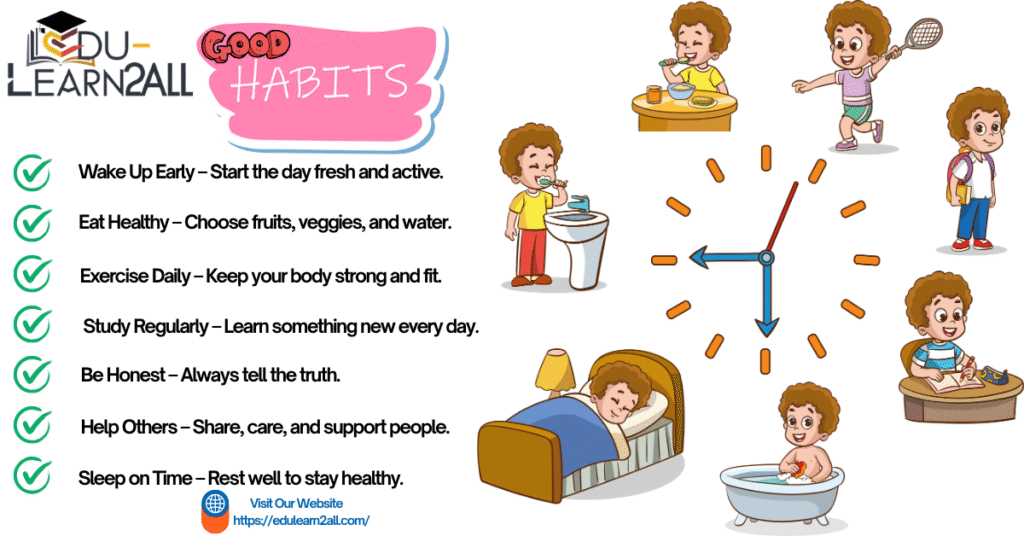
- Wake Up Early – Start the day fresh and active.
- Eat Healthy – Choose fruits, veggies, and water.
- Exercise Daily – Keep your body strong and fit.
- Study Regularly – Learn something new every day.
- Be Honest – Always tell the truth.
- Help Others – Share, care, and support people.
- Sleep on Time – Rest well to stay healthy.
Good Manners in Students
How to Improve Study Habits Good manners are the reflection of a student’s character. They help students become respectful, responsible, and well-liked by teachers, classmates, and society. Practicing good manners not only builds discipline but also creates a positive learning environment.
Important Good Manners for Students
- Respect Teachers and Elders – Greet them politely, listen carefully, and follow their advice.
- Be Punctual – Arrive at school and classes on time.
- Use Polite Words – Say please, thank you, sorry, excuse me when needed.
- Keep Clean and Tidy – Maintain personal hygiene and keep the classroom neat.
- Help Others – Share books, assist friends, and support classmates.
- Pay Attention in Class – Avoid talking while teachers or friends are speaking.
- Show Gratitude – Appreciate what you have instead of complaining.
- Obey Rules – Follow school rules and respect discipline.
- Be Honest – Never cheat in exams or tell lies.
- Care for Public Property – Do not damage books, desks, or school furniture.
Why Good Manners Matter
- Build respect and trust.
- Improve confidence and communication.
- Create a positive school environment.
- Prepare students for success in life.

Final Thoughts
How to Improve Study Habits Improving study habits is not about studying harder—it’s about studying smarter. In 2025, technology gives students more resources than ever, but self-discipline, focus, and consistency remain the keys to success. Start with small changes, build better habits step by step, and you’ll see lasting results in your studies.
FAQs How to Improve Study Habits
1. What are the best ways to improve study habits in 2025?
The best ways include setting clear goals, using digital planners, practicing active recall, and leveraging AI study tools without over-relying on them.
2. How can I stay focused while studying?
Choose a quiet environment, use the Pomodoro technique, and avoid phone distractions with apps like Forest or airplane mode.
3. Are study apps really helpful?
Yes. Apps like Notion, Quizlet, and Anki help organize notes, create flashcards, and improve memory retention when used consistently.
4. How many hours should I study daily?
It depends on your workload, but 2–4 focused hours with breaks is more effective than long, distracted study sessions.
5. What foods improve study performance?
Fruits, nuts, whole grains, and water support brain health. How to Improve Study Habits Avoid too much sugar and caffeine, which can cause energy crashes.
6. How do I improve study habits for exams?
Start early, break topics into smaller parts, practice past papers, and use spaced repetition for better retention.
7. Can technology replace traditional study habits?
How to Improve Study Habits No. Technology supports learning, but critical thinking, discipline, and consistent practice remain the foundation of good study habits.
