
Introduction
Blended Learning Education has evolved significantly over the years, moving from traditional classroom settings to more flexible and dynamic approaches. One of the most effective and widely adopted methods today is blended learning, a hybrid model that combines online digital media with traditional face-to-face classroom instruction.
This approach offers the best of both worlds—personalized digital learning and direct teacher interaction—making education more accessible, engaging, and effective. In this comprehensive guide, we’ll explore:
- What blend learning is and why it matters
- Different models of blend learning
- Benefits for students, teachers, and institutions
- Challenges and how to overcome them
- Future trends in blended education
- Best practices for successful implementation
By the end, you’ll have a clear understanding of how blend learning is shaping the future of education.
What is Blended Learning?
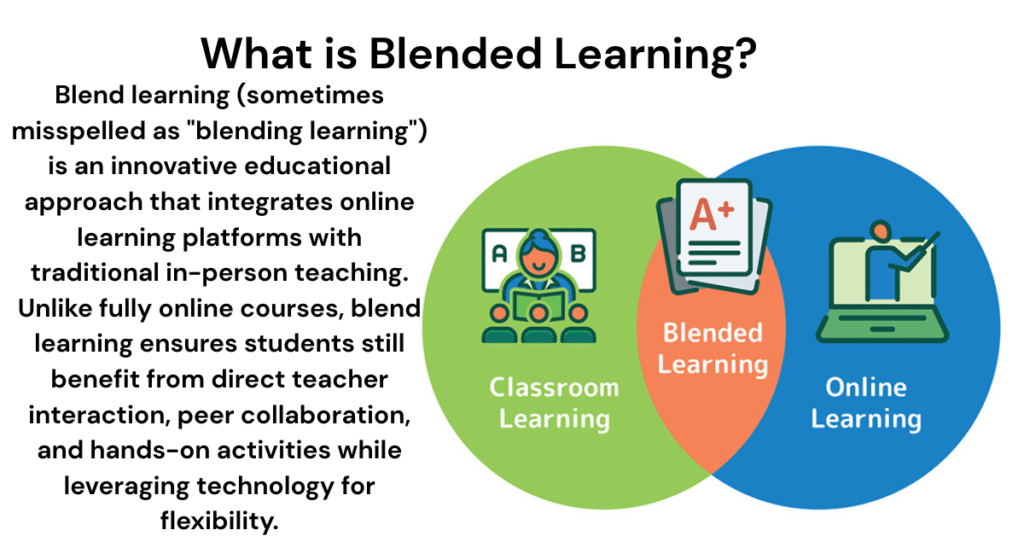
Blend learning (sometimes misspelled as “blending learning”) is an innovative educational approach that integrates online learning platforms with traditional in-person teaching. Unlike fully online courses, blend learning ensures students still benefit from direct teacher interaction, peer collaboration, and hands-on activities while leveraging technology for flexibility.
Key Components of Blended Learning
- Online Learning Elements – Video lectures, quizzes, discussion forums, and interactive modules.
- Face-to-Face Instruction – Classroom discussions, lab work, and teacher-guided lessons.
- Flexible Learning Paths – Students can learn at their own pace while meeting curriculum goals.
This model is not just about adding technology to classrooms but about enhancing the learning experience through strategic integration.
6 Effective Models of Blended Learning
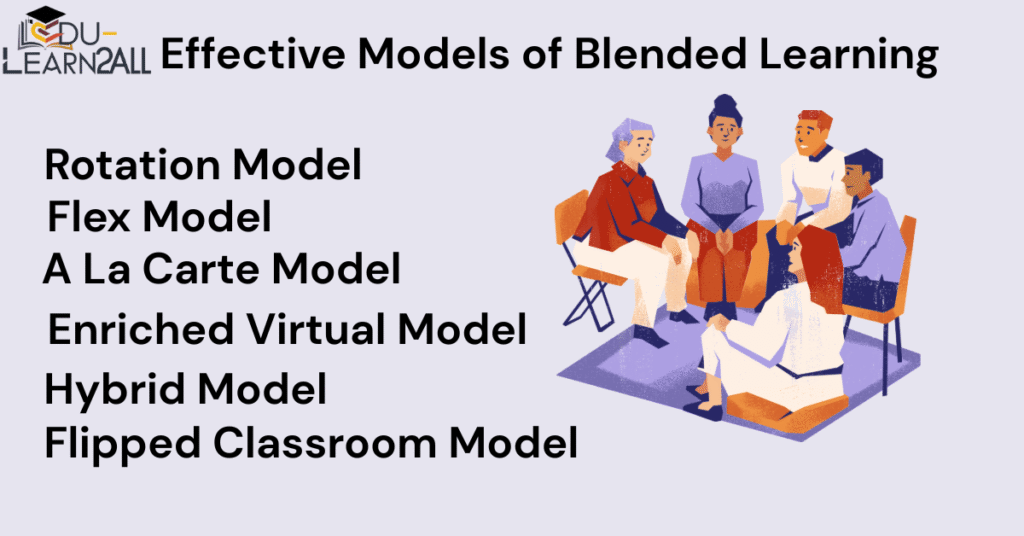
Different institutions adopt blend learning in various ways. Here are the six most common models:
1. Rotation Model
Students rotate between online learning stations and teacher-led sessions on a fixed schedule.
- Example: A math class where students spend 30 minutes on an adaptive learning app, then 30 minutes in a small group with the teacher.
2. Flex Model
Most instruction is delivered online, but teachers provide on-demand support as needed.
- Example: A virtual school where students complete coursework independently but can schedule one-on-one tutoring.
3. A La Carte Model
Students take one or more online courses alongside traditional classes.
- Example: A high school student taking an advanced coding course online while attending regular classes.
4. Enriched Virtual Model
Primarily online, but requires occasional in-person sessions for labs or exams.
- Example: A college degree program where students attend campus only for final presentations.
5. Flipped Classroom Model
Students learn theory online at home and apply knowledge in class through activities.
- Example: Watching lecture videos before class, then solving problems with peers during school hours.
6. Hybrid Model
A balanced mix where online and in-person learning are equally important.
- Example: A language course with 50% virtual lessons and 50% conversational practice in class.
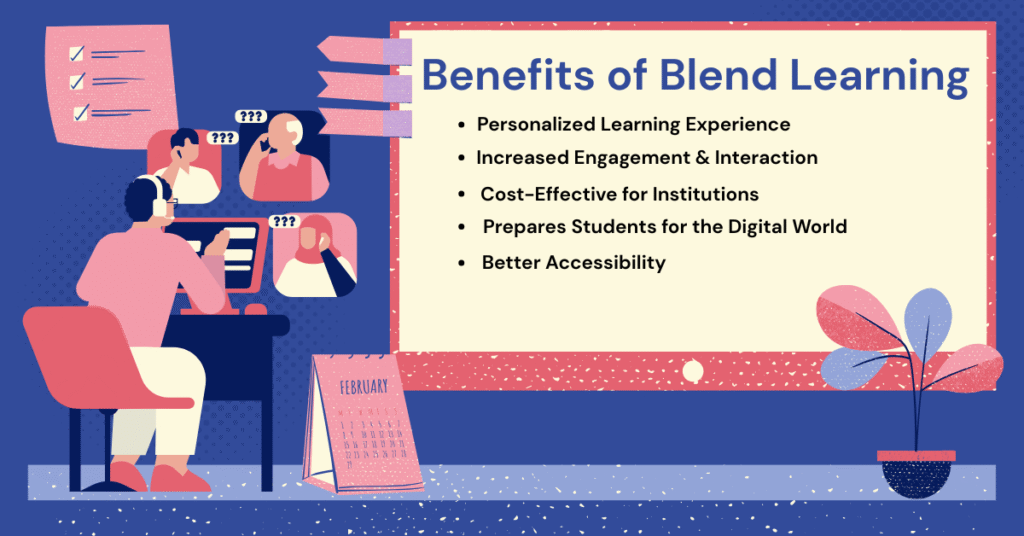
Benefits of Blend Learning
1. Personalized Learning Experience
- Students can learn at their own pace, revisiting difficult concepts online.
- AI-driven platforms adapt to individual learning styles.
2. Increased Engagement & Interaction
- Gamified quizzes and discussion forums make learning more interactive.
- Teachers can focus on critical thinking rather than just lectures.
3. Cost-Effective for Institutions
- Reduces the need for physical textbooks and printed materials.
- Scalable for large student populations.
4. Prepares Students for the Digital World
- Develops tech literacy, a crucial skill in today’s workforce.
- Encourages self-discipline and time management.
5. Better Accessibility
- Ideal for remote learners or those with disabilities.
- Breaks geographical barriers in education.
Challenges & Solutions in Blend Learning
1. Technology Gaps
- Challenge: Not all students have reliable internet or devices.
- Solution: Schools can provide lending devices or offline resources.
2. Teacher Training
- Challenge: Educators may struggle with digital tools.
- Solution: Regular professional development workshops.
3. Student Motivation
- Challenge: Some learners may fall behind without supervision.
- Solution: Use progress tracking tools and regular check-ins.
Future Trends in Blended Learning
- AI-Powered Adaptive Learning – Systems that adjust content based on student performance.
- Virtual & Augmented Reality (VR/AR) – Immersive simulations for complex subjects.
- Blockchain for Credentials – Secure digital certificates for online courses.
- More Microlearning – Bite-sized lessons for better retention.
Best Practices for Successful Blended Learning
✅ Set Clear Objectives – Define what online and in-person sessions should achieve.
✅ Use the Right Tools – Platforms like Google Classroom, Moodle, or Khan Academy.
✅ Encourage Collaboration – Group projects and peer reviews.
✅ Monitor Progress – Analytics to identify struggling students.
✅ Get Feedback – Regularly ask students and teachers for improvements.
Conclusion
Blended learning is not just a trend—it’s the future of education. By combining digital flexibility with human interaction, it creates a more engaging, efficient, and inclusive learning environment.
Schools, colleges, and corporate training programs that embrace this model will stay ahead in the evolving educational landscape. Whether you’re an educator, student, or policymaker, understanding blended learning is key to unlocking better learning outcomes.
Are you ready to transform education with blended learning? Start implementing these strategies today!
FAQs About Blended Learning
Q: Is blended learning better than fully online learning?
A: Yes, because it retains human interaction while offering flexibility.
Q: How much time should be spent online vs. offline?
A: It varies, but a 70-30 or 50-50 split is common.
Q: Can blended learning work for all age groups?
A: Absolutely! From K-12 to higher education and corporate training, it’s adaptable.
