

Introduction
In today’s fast-evolving educational landscape, a Managed Learning Environment (MLE) plays a crucial role in streamlining learning processes, enhancing student engagement, and improving institutional efficiency. Unlike traditional learning systems, an MLE integrates technology, administration, and pedagogy into a unified platform, making education more accessible and effective.
This comprehensive guide explores what a Managed Learning Environment is, its key features, benefits, challenges, and how it compares to other learning systems. By the end, you’ll understand why MLEs are becoming indispensable in modern education.
What is a Managed Learning Environment (MLE)?
A Managed Learning Environment (MLE) is a structured digital ecosystem that combines learning management systems (LMS), administrative tools, and collaborative features to support education delivery. It serves as a centralized hub where educators, students, and administrators can interact, manage coursework, track progress, and access resources seamlessly.
Unlike standalone e-learning platforms, an MLE integrates multiple functionalities, including:
- Course management – Organizing syllabi, assignments, and assessments.
- Student tracking – Monitoring attendance, performance, and engagement.
- Collaboration tools – Discussion forums, live chats, and group projects.
- Resource repository – Storing e-books, videos, and lecture notes.
- Administrative automation – Handling enrollments, grading, and reporting.
Key Features of a Managed Learning Environment
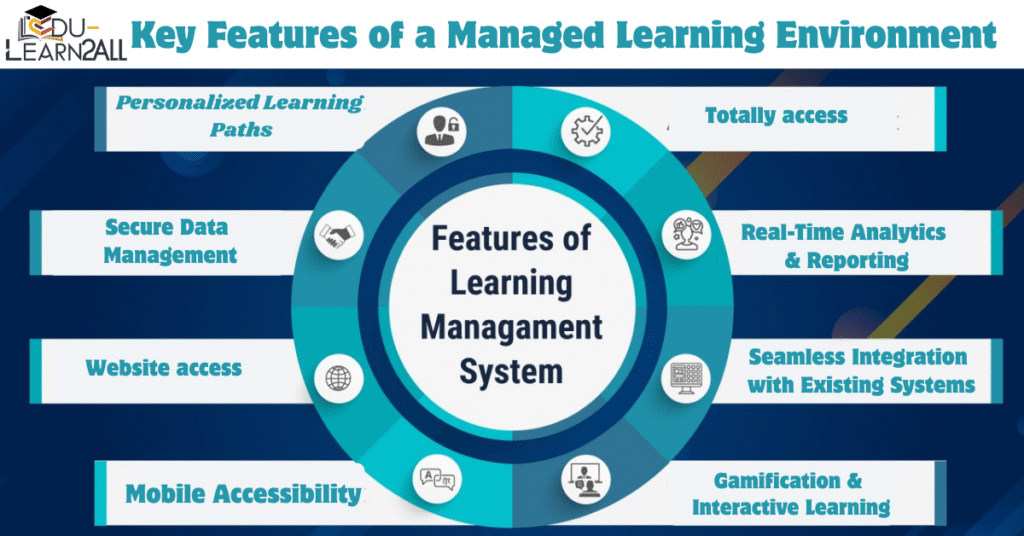
A well-designed MLE offers several advanced features that enhance learning experiences:
1. Personalized Learning Paths
MLEs use AI and data analytics to customize learning experiences based on individual student needs, strengths, and weaknesses.
2. Seamless Integration with Existing Systems
They integrate with Student Information Systems (SIS), HR software, and third-party tools like Zoom or Microsoft Teams.
3. Real-Time Analytics & Reporting
Educators gain insights into student performance, engagement levels, and course effectiveness through dashboards and automated reports.
4. Mobile Accessibility
Most MLEs support mobile learning, allowing students to access materials anytime, anywhere.
5. Gamification & Interactive Learning
Features like badges, leaderboards, and quizzes make learning more engaging and motivating.
6. Secure Data Management
With role-based access control, encryption, and compliance with data protection laws (like GDPR), MLEs ensure data security.
Benefits of a Managed Learning Environment
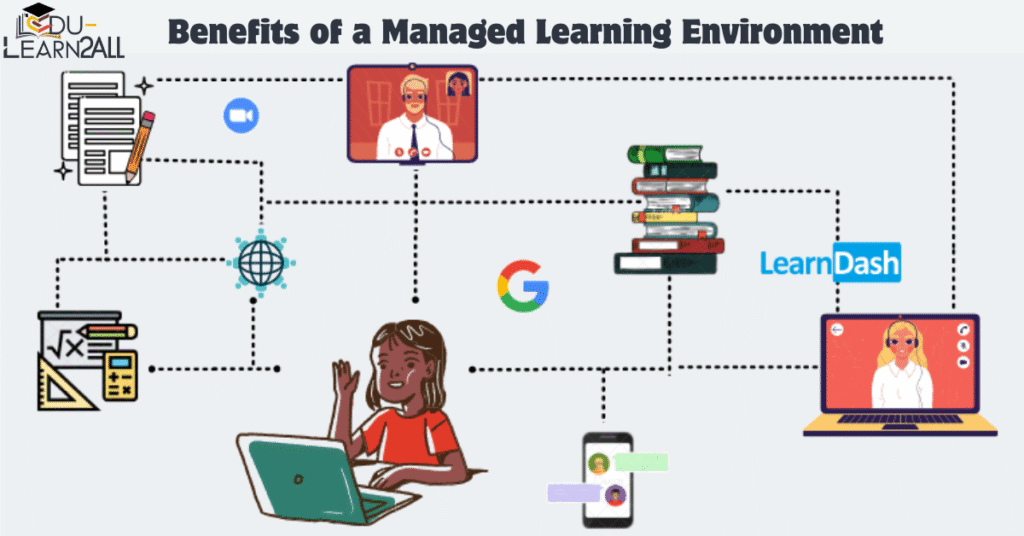
Adopting an MLE offers numerous advantages for educational institutions, teachers, and learners:
For Institutions:
✔ Cost Efficiency – Reduces paperwork and manual administrative tasks.
✔ Scalability – Supports growing student populations effortlessly.
✔ Improved Compliance – Ensures adherence to accreditation and regulatory standards.
For Educators:
✔ Simplified Course Management – Automated grading, attendance tracking, and lesson planning.
✔ Enhanced Student Engagement – Interactive tools keep learners motivated.
✔ Data-Driven Teaching – Analytics help identify struggling students early.
For Students:
✔ Flexible Learning – Access courses at their own pace.
✔ Better Collaboration – Engage with peers and instructors easily.
✔ Personalized Feedback – AI-driven insights help improve performance.
Managed Learning Environment vs. Learning Management System (LMS)
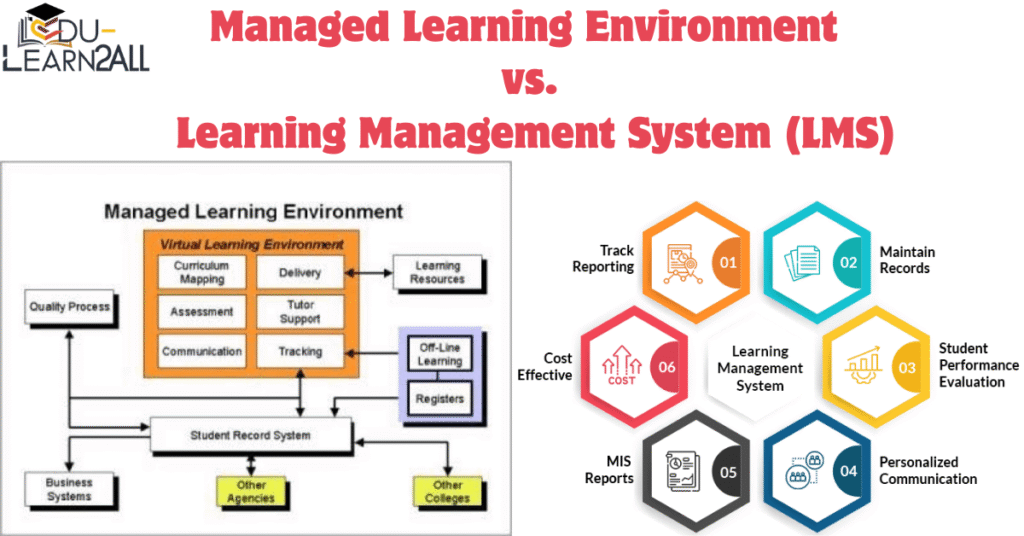
While both MLEs and LMSs support digital learning, they differ in scope:
| Feature | Managed Learning Environment (MLE) | Learning Management System (LMS) |
|---|---|---|
| Scope | Broader (includes LMS + admin tools) | Focuses only on course delivery |
| Integration | Connects with SIS, HR, and other systems | Limited to learning content |
| User Roles | Supports admins, teachers, students | Primarily for instructors & learners |
| Functionality | Holistic (learning + management) | Course-centric |
An MLE is more comprehensive, making it ideal for institutions needing end-to-end education management.
Challenges in Implementing an MLE
Despite its benefits, deploying an MLE comes with challenges:
1. High Initial Costs
Setting up infrastructure, training staff, and licensing software can be expensive.
2. Resistance to Change
Educators and students may resist transitioning from traditional methods.
3. Technical Issues
System downtime, bugs, and compatibility problems can disrupt learning.
4. Data Privacy Concerns
Storing sensitive student data requires robust cybersecurity measures.
5. Requires Continuous Updates
To remain effective, MLEs need regular software upgrades and maintenance.
Best Practices for a Successful MLE Implementation
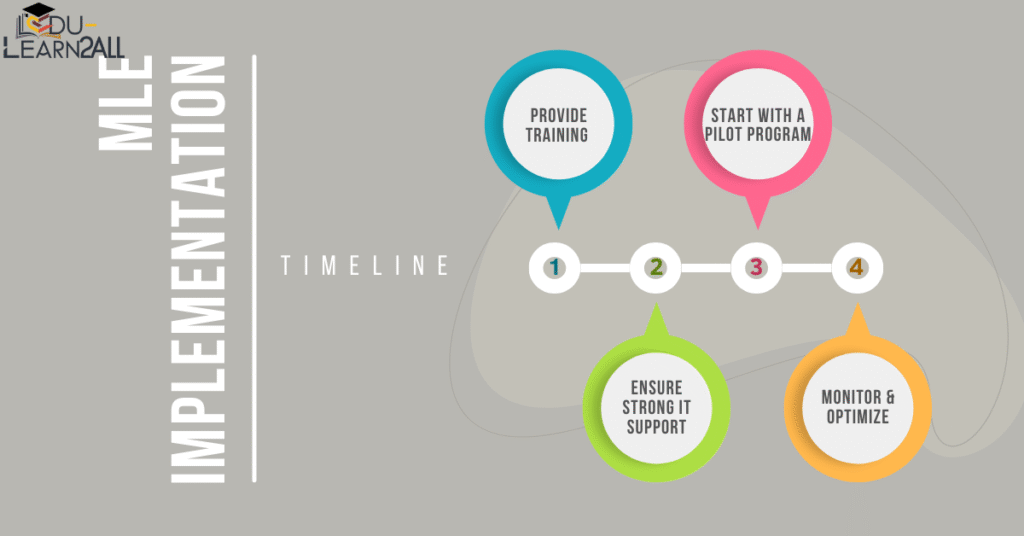
To maximize the benefits of an MLE, follow these best practices:
✅ Conduct a Needs Assessment – Identify institutional and learner requirements before choosing an MLE.
✅ Provide Training & Support – Ensure teachers and students are comfortable using the system.
✅ Start with a Pilot Program – Test the MLE with a small group before full-scale deployment.
✅ Ensure Strong IT Support – A dedicated team can resolve technical issues quickly.
✅ Monitor & Optimize – Use feedback and analytics to refine the MLE over time.
Future Trends in Managed Learning Environments
The future of MLEs is shaped by emerging technologies:
🔹 AI & Machine Learning – Smarter personalization, automated tutoring, and predictive analytics.
🔹 Virtual & Augmented Reality (VR/AR) – Immersive learning experiences.
🔹 Blockchain for Credentialing – Secure, tamper-proof digital certificates.
🔹 IoT Integration – Smart classrooms with connected devices.
🔹 5G Connectivity – Faster, more reliable access to cloud-based MLEs.
Conclusion
A Managed Learning Environment (MLE) revolutionizes education by merging learning, administration, and collaboration into one powerful platform. With benefits like personalized learning, real-time analytics, and seamless integration, MLEs are the future of modern education.
While challenges like cost and resistance to change exist, proper planning and execution can ensure successful adoption. As technology evolves, MLEs will continue to enhance accessibility, engagement, and efficiency in education worldwide.
Ready to Transform Your Institution with an MLE?
If you’re looking to implement a Managed Learning Environment, start by evaluating your needs, exploring top MLE providers, and preparing your team for a smooth transition. The future of education is digital—don’t get left behind!
Managed Learning Environment (MLE) – FAQs
1. What is a Managed Learning Environment (MLE)?
A Managed Learning Environment (MLE) is a digital platform that integrates learning management, administrative functions, and collaboration tools to streamline education delivery. It combines features like course management, student tracking, and resource sharing into a single system.
2. How is an MLE different from an LMS?
An LMS (Learning Management System) focuses primarily on course delivery, while an MLE is broader, incorporating administrative tools, student data management, and institutional workflows alongside learning content.
3. What are the key benefits of using an MLE?
- For Institutions: Cost savings, scalability, compliance management.
- For Educators: Automated grading, performance analytics, engagement tools.
- For Students: Personalized learning, 24/7 access, interactive content.
4. What features should a good MLE have?
- Course & assessment management
- Real-time analytics & reporting
- Mobile compatibility
- Secure data storage
- Integration with third-party tools (Zoom, Microsoft Teams, SIS)
5. Can MLEs support remote learning?
Yes! MLEs are designed for blended and remote learning, offering virtual classrooms, discussion forums, and cloud-based resource access.
6. How secure is student data in an MLE?
Reputable MLEs use encryption, role-based access, and compliance with GDPR/FERPA to protect sensitive data.
7. What are the challenges of implementing an MLE?
- High initial setup costs
- Resistance to change from staff/students
- Need for ongoing technical support
8. How do I choose the right MLE for my institution?
Consider:
✔ Your budget
✔ Required features (LMS + admin tools)
✔ Ease of integration with existing systems
✔ Vendor support & training options
9. Are MLEs suitable for corporate training?
Absolutely! Many businesses use MLEs for employee training, compliance courses, and skill development programs.
10. What’s the future of MLEs?
Expect advancements in:
- AI-driven personalized learning
- VR/AR for immersive training
- Blockchain for credential verification
- 5G-enabled faster access
